Biomass index vs. canopy cover percentage: what registries actually ask for
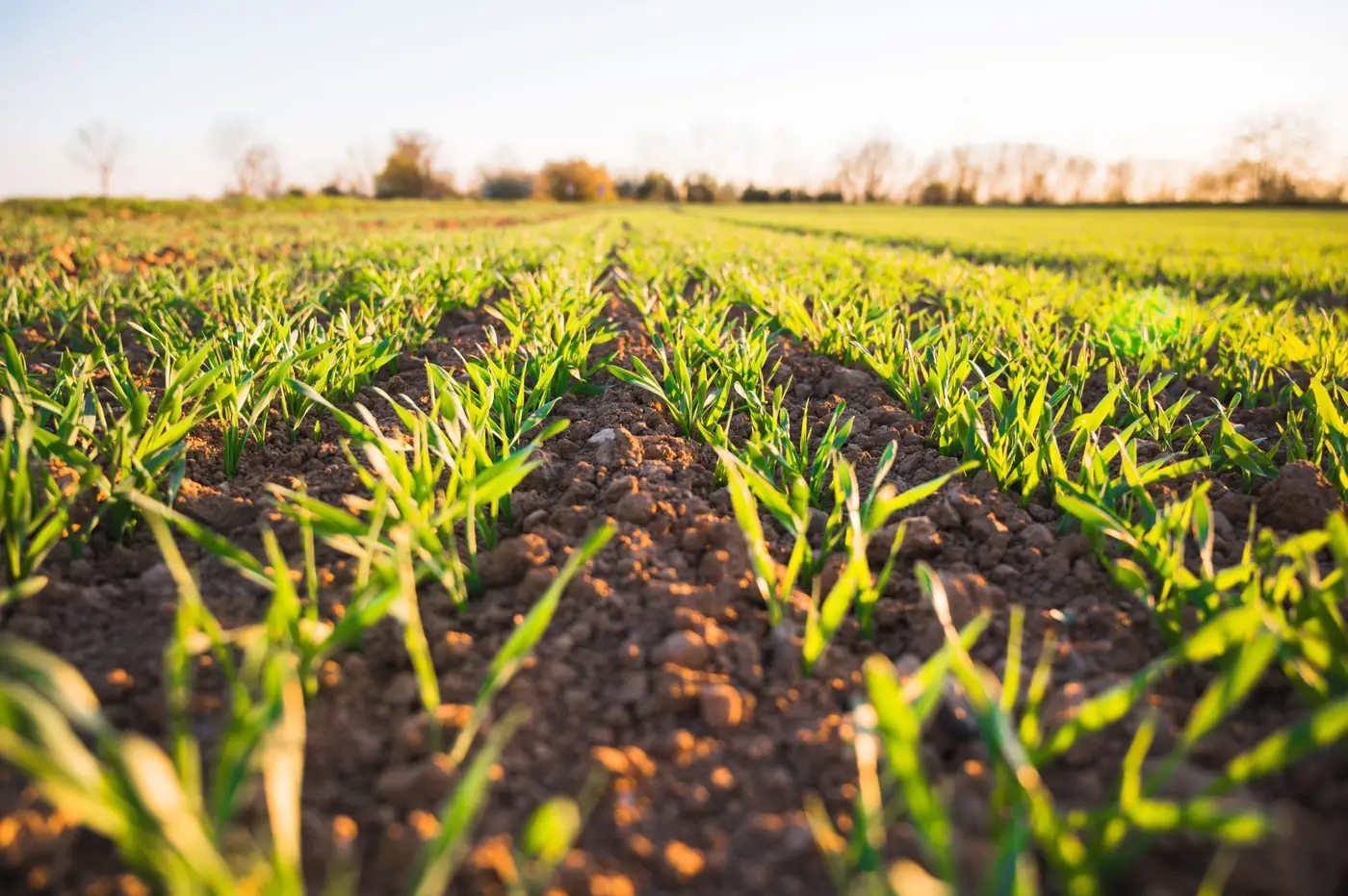
A grower's cover crop report lands on your desk with a greenness score attached, and you have to decide whether that number answers the question your protocol is asking. It usually doesn't, not directly. Biomass index and canopy cover percentage get treated as interchangeable in a lot of vendor dashboards, and they aren't measuring the same thing.
Biomass index: a proxy, not a measurement
A biomass index, usually built off some flavor of vegetation index like NDVI, is a relative signal of plant vigor and density pulled from spectral reflectance. It goes up as a stand greens up and fills in, and it's genuinely useful for spotting a thin stand or a field that never took. But it's an index, not a count. There's no fixed scale where a 0.6 NDVI value means a specific amount of dry matter per acre, and the same reading can mean different things on different soils, species mixes, or flight dates. Verifiers who try to cite a raw index value as proof of biomass accumulation run into the same problem every time: the number doesn't translate across fields without a lot of ground-truthing that most programs aren't set up to do at scale.
That's the gap between what a biomass index tells you and what a carbon or practice-based protocol wants on file.
Canopy cover percentage: closer to the actual protocol language
Canopy cover percentage asks a plainer question: what share of the ground, viewed from above, is covered by living plant material versus bare soil or residue. That's closer to the language conservation practice standards and most cover crop verification frameworks use, because it maps to the thing the practice is supposed to accomplish, soil armor and ground cover during the off-season. A field can have a modest biomass index and still clear a cover threshold if the stand is thin but evenly distributed. A field can have a strong biomass signal concentrated in patches and still fail a cover standard if half the field is bare.
Practice-based programs tend to care about establishment and presence more than density. Was a cover crop planted, did it come up, is there living cover or residue on the ground during the window the protocol specifies. That's a yes-or-no classification question, not a continuous index.
Cover crop establishment metric: the thing on the actual checklist
When you read the paperwork most programs ask growers to generate, the requested output isn't a greenness score at all. It's a classification: established or not established, cover present or absent, tracked by field and by season. A verifier can match that classification straight against an enrollment list, field by field, season by season, with no spectral value to interpret.
This is where a lot of self-reported field data falls short. A grower attests to planting a cover crop, maybe attaches a seed receipt, and the biomass numbers from whatever imagery tool they used get bundled in as supporting color rather than the proof point itself. If your review process is built around confirming the practice happened, a greenness curve from one flyover doesn't answer that on its own. What answers it is a season-by-season record, built from imagery passes over the enrolled boundary, that calls establishment and residue presence field by field. That's the kind of record Cover Crop Check is built to produce from wide-swath multispectral passes over your enrolled acres.
What to put in the verification file
If you're building a verification checklist, ask your data source for the classification, not just the index. Request establishment status and residue status per field per season, tied to the enrollment boundary and the dates your protocol specifies. If a vendor can only hand you a raw vegetation index, ask how that number was converted into a cover or establishment call, and whether that conversion holds up across soil types and planting dates in your program.
A biomass index tells you something happened in a field. A cover crop establishment metric tells you what happened on the ground, against the standard you're verifying to. Those aren't the same deliverable, and it's worth knowing which one is sitting in your file before an auditor asks.
Get in touch if you want to see what a seasonal establishment record looks like for your enrolled fields before your next verification window.