Reconciling grower-reported planting dates with satellite green-up
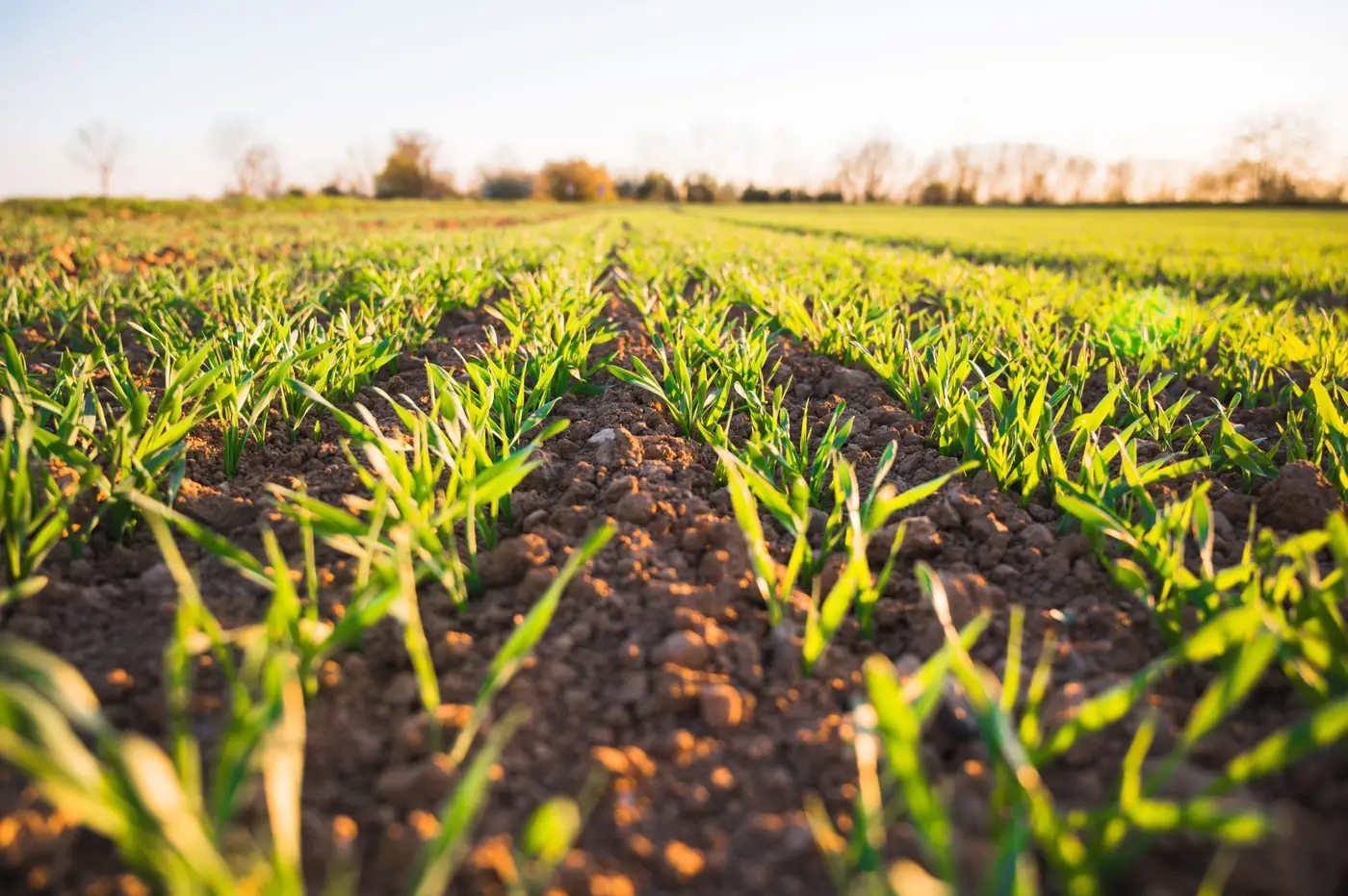
Every verifier who has pulled a season's worth of enrollment records against a green-up signal has hit the same wall: the dates don't line up, and the gap isn't consistent enough to explain with one rule.
A grower logs a drill date of October 3rd. The green-up signal on that field doesn't show a clear canopy response until October 19th. Is that a problem? Maybe. Or maybe it's a cold snap that slowed germination, a no-till drill that laid seed into dry topsoil that needed a rain event to activate, or just the normal lag between a cereal rye seed hitting soil and enough leaf area showing up to register on a multispectral pass. The planting date and the green-up date are measuring two different things, and treating them as interchangeable is where most reconciliation workflows go wrong before they even start.
Why the two dates diverge by design, not by error
A planting date is an input. It's the day seed went in the ground, and it's whatever the grower (or their agronomist, or the custom applicator) wrote down. A green-up date is an output: the day the crop's canopy reaches enough density and chlorophyll signal to separate from bare soil or residue in an imagery pass. Between those two points sits germination, emergence, and early tillering, and that stretch runs anywhere from a week to three weeks or more depending on species, seeding method, and what the weather did in between.
Drilled cereal rye into moisture generally greens up faster than broadcast-seeded rye that's waiting on a rain to incorporate it. Aerial-seeded cover into standing corn shows almost no visible response until the cash crop is off and sunlight reaches the ground, which can push the apparent green-up weeks past the logged flight date. None of that is a red flag on its own. It's agronomy, and any reconciliation process that doesn't build in a species- and method-specific lag window will spend its time chasing discrepancies that are just normal variation.
Setting a tolerance window instead of a single cutoff
The workable approach we've seen verification teams land on is a tolerance window keyed to seeding method rather than a flat number of days applied to every field. Drilled plantings get a shorter expected lag than broadcast or aerial. Legume-heavy mixes, which tend to green up slower than a straight rye stand, get their own window. A field's logged planting date plus its method-specific window gives you an expected green-up range, and the question becomes whether the observed green-up falls inside that range, not whether it matches the planting date exactly.
Fields where the gap falls inside the window close out without a conversation. Fields where green-up never clears the detection threshold within a reasonable extension of that window, or where there's no canopy signal at all by the point in the season when the mix should be well established, are the ones worth a call to the grower or a site visit. That's a much shorter list than "every field where the dates don't match to the day," and it's the list a reviewer can work through before a reporting deadline.
It's also worth logging the gap itself, not just the pass/fail outcome. A field that's consistently nine days later than its logged date across two seasons tells you something different than a field that's dead on one year and three weeks off the next. The first might be a planting date that's always logged as the intended date rather than the actual field date. The second is worth a closer look.
This is the exact reconciliation problem Cover Crop Check was built to feed: a season-by-season read of whether cover established and whether residue was present on each enrolled field, pulled from wide-swath multispectral passes, so your reconciliation isn't starting from a single disputed date but from a tracked record across the program period. If you're building or tightening a reconciliation process for this season's enrollment, take a look at how it fits into your verification workflow.