Cover crop green-up vs. winter weeds: what satellite imagery shows
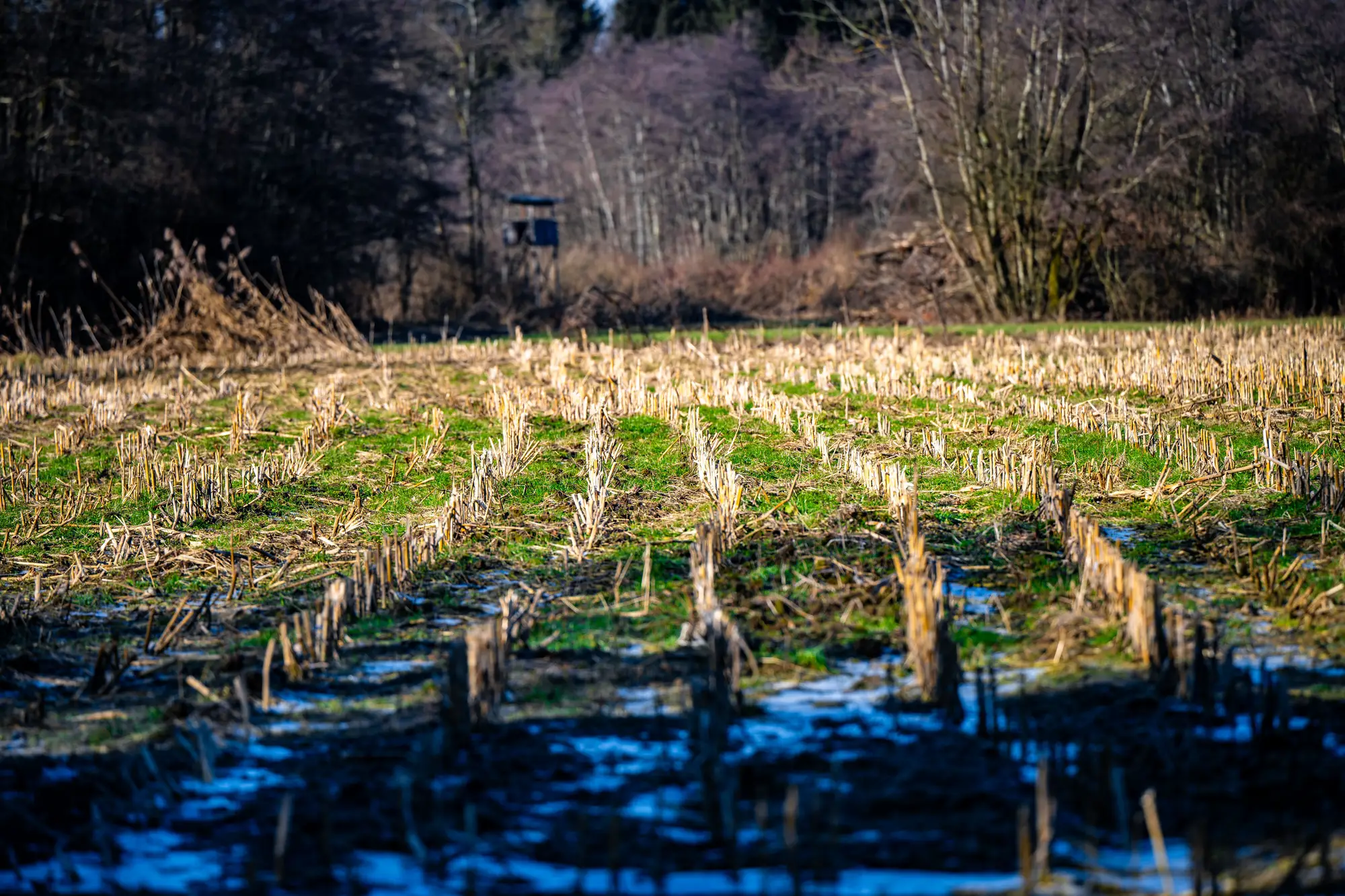
A field manager sends in a December image showing solid green across a harvested corn field. Looks like a textbook cover crop stand. Then you pull the planting record and there's no drill pass logged, no seed invoice, nothing. What you're looking at is probably henbit, chickweed, or marestail that moved in on bare ground the same week the cereal rye would have been coming up anyway. From a single NDVI snapshot, the two can be almost impossible to tell apart.
This is the gap that produces a false establishment call: a field gets marked "cover crop established" on the strength of green pixels that came from weeds filling in ground where nothing was ever drilled. For a grower self-reporting practice adoption, that mistake is easy to make honestly. For a program paying out on verified practice, it's the exact failure mode worth designing around.
Why green-up alone isn't proof
Winter annual weeds and cover crop species green up on overlapping timelines, especially in the Mid-South and lower Midwest where cereal rye, crimson clover, and common winter weeds all respond to the same October-into-November temperature drop. NDVI is a measure of chlorophyll activity. A canopy of marestail rosettes can produce the same spectral signature as a canopy of rye at a similar growth stage. If all a verifier has is a single greenness value above some threshold, there's no way to separate "the cover crop took" from "the field went to weeds because nothing was ever planted."
A few things help separate the two, and none of them are a single index:
- Pattern geometry. A drilled or broadcast cover crop shows up as a fairly uniform stand across the field, sometimes with faint row structure from the drill. Volunteer weeds tend to cluster where moisture sat longest, along field edges, in low spots, around the pivot track, leaving a blotchy, uneven texture even when the average NDVI looks fine.
- Timing relative to harvest. Cover crop green-up should start shortly after the cash crop comes off and the field was worked or drilled. Winter annual weed flushes often lag a few weeks behind that, since they're germinating on their own schedule rather than from a seeding event.
- Multiple passes, not one. A single image can't distinguish a stand that's thickening week over week (consistent with an establishing cover crop) from one that's patchy in October, fuller in November, and still patchy in December (more consistent with scattered weed emergence filling gaps).
- Residue signal alongside greenness. Fields with real cover crop establishment usually still show prior-crop residue under a young stand early in the season. A field that's gone straight to bare-soil-then-weeds often shows a different residue signature, because tillage or lack of a drill pass changed the surface.
None of these is conclusive by itself. Taken together across a few passes in a season, they tell a different story than one green map.
What this means for a verification workflow
If your program is paying incentives or counting acres toward a sustainability claim based on cover crop adoption, a grower's self-report and a single overflight both have the same blind spot: they can't rule out volunteer weeds standing in for an actual seeded cover crop. Tracking the field across the season catches what a smarter threshold on one image can't: a stand that's thin at planting and never fills in, or one that greens up on the wrong calendar relative to harvest, gets flagged instead of waved through.
That's the gap Cover Crop Check is built to close: a season-by-season check on your enrolled field boundaries, built from wide-swath multispectral passes, that comes back as a per-field cover established / not established and residue present / absent call tracked across the program period, instead of a one-time snapshot standing in for the whole season.
If your program is still reconciling grower self-report against what the imagery shows, it's worth seeing what a season of tracked passes looks like on your own enrolled acres.