Multi-species vs single-species cover crops: what satellite imagery can't tell you
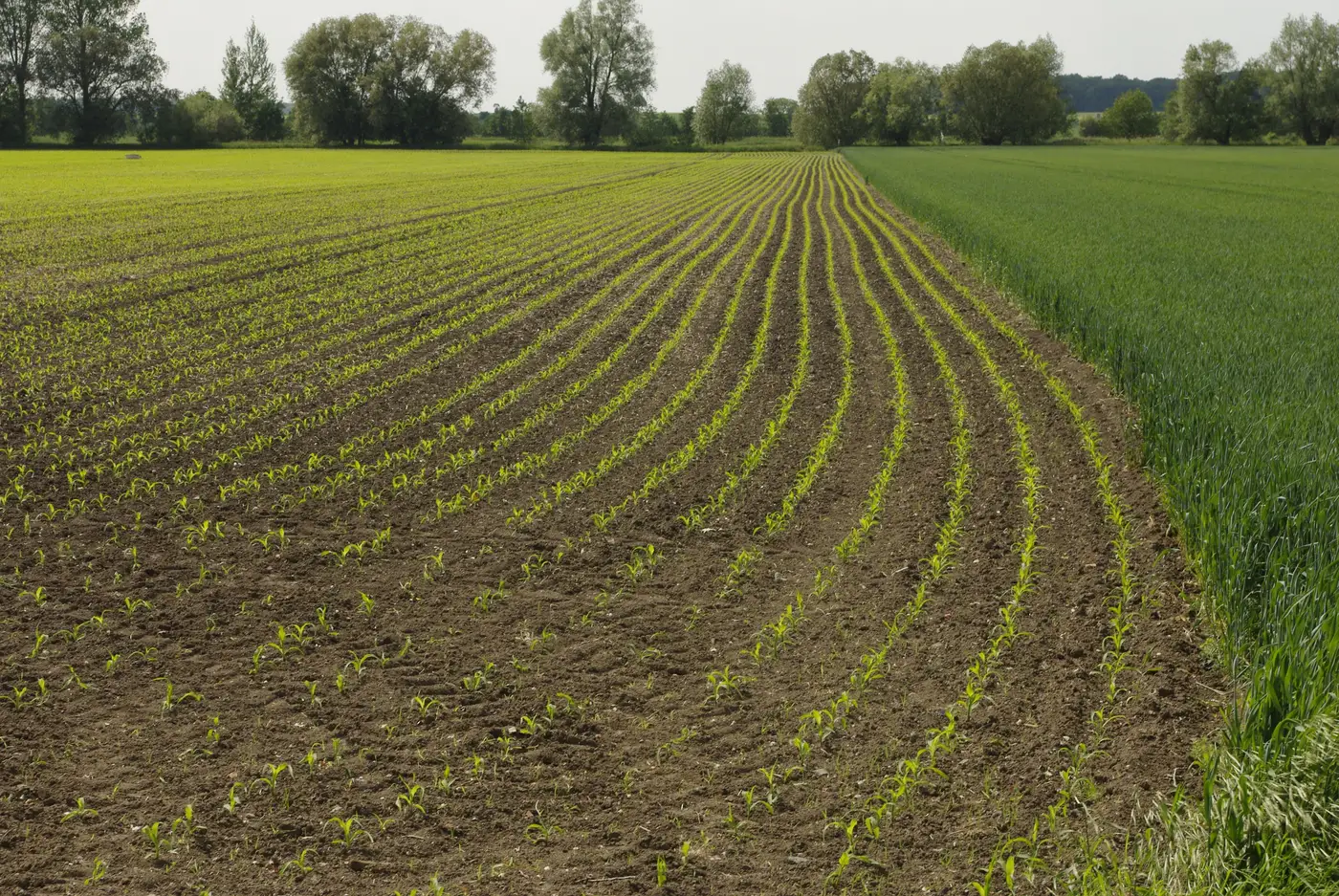
A grower enrolled in your program plants a five-way mix: cereal rye, crimson clover, radish, vetch, maybe a buckwheat chaser. Another grower on the same soil type drills straight cereal rye. Both fields get scored the same way when the imagery comes back: cover established, or not. That's useful, and it's also the limit of what a wide-swath multispectral pass is built to answer.
What the canopy signal detects
A healthy cover crop stand, whatever is in it, reflects light differently than bare soil or standing residue. That difference is what shows up as a strong vegetation index reading. A five-species mix with good germination and a single-species rye stand with good germination will both register as "established" because the sensor reads green, growing canopy, independent of how many species are in it. Canopy closure drives the signal, whatever's making up that canopy.
Residue works the same way. Once a cover crop is terminated, imagery can distinguish standing or flattened residue from exposed soil, which is the metric most soil carbon protocols care about for erosion control and organic matter retention. It doesn't matter whether that residue came from a monoculture or a blend. The reflectance of dead plant material reads the same regardless of what was growing before termination.
So for the two questions a program verifier is usually paid to answer, did cover get established, and is residue present after termination, a mixed stand and a single-species stand are functionally identical from orbit. That's the part of the mixed-species cover crop verification question that imagery handles cleanly.
Where the signal goes quiet
What a multispectral pass can't do is tell you the clover came up but the radish didn't, or that the mix established at 60% of the seeding rate on the bag tag because half the vetch seed was bad. Species-level resolution requires spectral detail and often ground sampling that a wide-swath satellite pass isn't collecting. A thin, patchy stand of five species that still closes canopy enough to clear the vegetation threshold will classify the same as a thick, uniform rye field. Canopy density can mask a mix that's underperforming against the species blend a grower committed to.
This matters more for mixed stands than single-species ones precisely because mixes are planted for reasons imagery can't verify: nitrogen fixation from the legume component, biopore formation from the radish, specific grazing or forage value from one species in the blend. A verifier checking a soil carbon claim against a practice standard that requires, say, a legume present in the mix needs to know whether that legume actually came up. A canopy index won't answer that. It answers "was there green cover," not "was there the green cover you paid for."
Termination timing adds another wrinkle. A single-species rye field terminated two weeks late looks different from one terminated on schedule, both to the eye and to a sensor, because rye keeps growing uniformly. A mix terminated late might show one species bolting while another stays low, producing a messier canopy signal that's harder to read as a clean pass or fail. This is a known blend imagery limit worth building into how a program sets its classification thresholds, not a reason to distrust the tool.
Building this into a verification workflow
The practical answer most programs land on is layered: let imagery carry the field-level, season-by-season confirmation of establishment and residue presence across every enrolled acre, and reserve species-composition spot checks, whether that's a windshield survey, a drone flyover, or a grower-submitted photo, for the subset of fields where the practice standard specifically requires knowing what's in the mix. That split keeps verification cost proportional to what's being claimed instead of asking one data source to answer two different questions.
If your program is paying on verified practice instead of a grower's word, a season-by-season classification built around establishment and residue cover is the piece imagery does reliably, across every enrolled field, every season of the program.
Get in touch if you want to see how that classification would look against your current enrollment list.