What counts as cover crop termination for carbon program payments
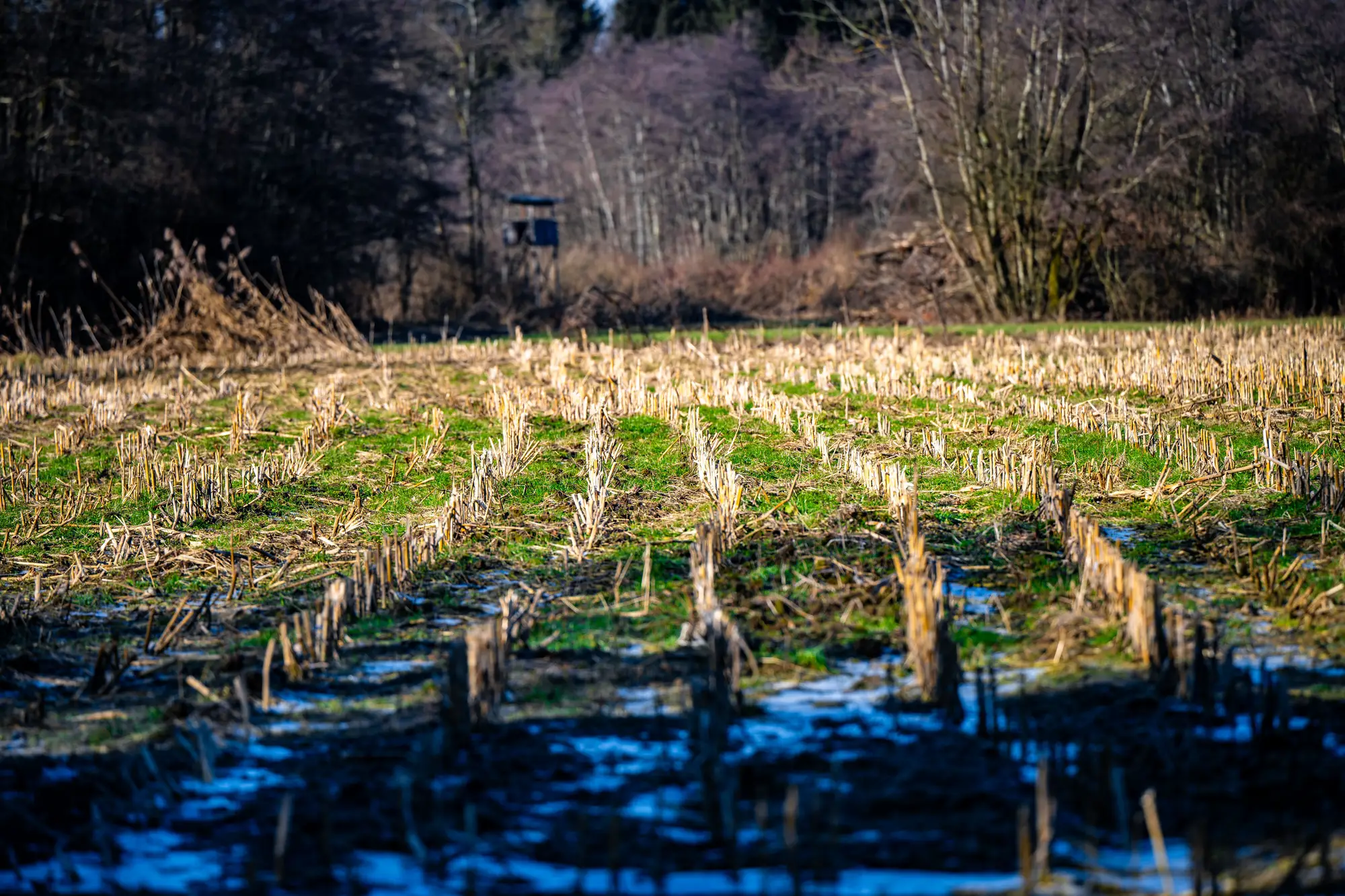
If you verify practice-change claims for a soil carbon program, you've run into this question on nearly every enrolled field: did termination happen the way the grower said it did, and did it happen on time. The word itself is simple. The paperwork around it is not.
Termination just means killing the cover crop stand before the cash crop goes in. That can happen a dozen ways: a burndown herbicide pass, roller-crimping, tillage, grazing it off, or just letting winterkill do the job on a species that wasn't going to survive the season anyway. Most protocols don't care which method a grower used. They care about two things: that it happened, and when.
Why the termination date is the payment trigger, not the method
Payment triggers in most soil carbon programs are built around a practice window, not a single action. A grower gets credited for maintaining cover through some minimum duration, usually tied to either a calendar date or a growth-stage benchmark (sometimes stated as a GDD accumulation, sometimes just "before planting" with a floor date attached). Terminate too early and the field may not clear the duration requirement even if a cover crop was clearly established in the fall. Terminate late and you're into a different problem: burndown creep into the cash crop's planting window, which some programs flag separately because it signals the cover crop interfered with planting rather than complementing it.
This is the part that trips up self-reported data. A grower knows roughly when they sprayed or rolled. They don't always log it precisely, and planting logs get backfilled from memory in February when the agronomist is filling out enrollment paperwork for last season. A termination date that's off by two or three weeks can flip a field from compliant to non-compliant under the program's own rules, and nobody involved is lying. They're just reconstructing a date from a busy fall.
Burndown timing versus "it looked terminated"
Termination isn't binary in the field the way it is on paper, and that's where a second layer of the problem shows up for verifiers. A burndown pass can brown off a stand in a week, or it can take closer to three depending on temperature, the herbicide used, and whether the cover crop was a cereal rye that shrugs off a light rate. Roller-crimping leaves standing residue that reads as "terminated" agronomically but still looks green from a distance for days. Winterkill is gradual by definition. Someone filing a termination date of "October 28" might be reporting the day they sprayed, the day the stand visibly browned, or the day they consider the field clear for planting, and those can be three different dates on the same field.
For a program verifier, that ambiguity matters because it sits right on top of the payment trigger. If the practice-change payment depends on cover being established through a minimum window and then terminated within a compliance band, you need a read on the field that doesn't depend on which of those three dates the grower had in mind when they filled out the form.
What a field-level check actually needs to show
What's actually useful is a direct read on field condition across the compliance window. That means knowing whether the field was carrying cover at the start of the window, and whether that cover (or its residue) was gone or down by the end of it. A seasonal pass that classifies cover established versus not established, and residue present versus absent, gives you that comparison without needing the grower's self-reported date to reconcile against anything. You're checking the condition of the field across the compliance period, not auditing a paperwork timestamp.
That's the gap Cover Crop Check is built around: a season-by-season read on cover and residue status for your enrolled fields, built from wide-swath multispectral passes rather than the grower's own log of when the sprayer ran. If you're tired of reconciling termination dates against memory, it's worth a look at what that confirmation covers for your next enrollment cycle.